Crafting Depth: A Practical Look at the 3D Layered Luna Moth Laser Cut SVG
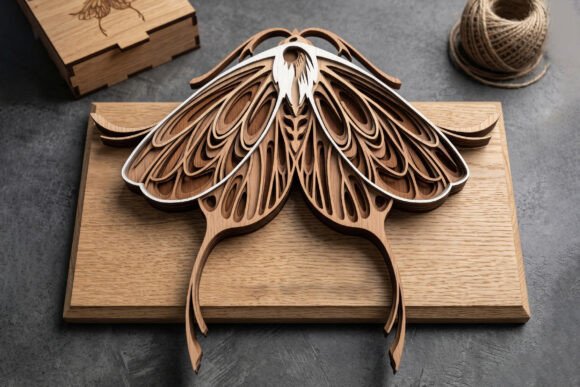
In the evolving landscape of digital fabrication, the transition from flat vector art to dimensional wall decor represents a significant shift in how creators approach home aesthetics and product design. Among the myriad of files available for laser cutting, the 3D Layered Luna Moth Laser Cut SVG stands out as a compelling case study in effective layered design. This asset is not merely a silhouette; it is a structured collection of organic shapes designed to interlock and stack, creating a sophisticated shadow-play effect that mimics the delicate texture of actual insect wings. For professionals and serious hobbyists alike, understanding the utility and limitations of such a file is essential before integrating it into a workflow or offering it as a finished good.
Deconstructing the Design Architecture
The core value of this specific digital asset lies in its architectural approach to biological forms. Unlike standard 2D cut files that rely solely on engraving or single-layer outlines, the 3D Layered Luna Moth Laser Cut SVG utilizes multiple distinct layers to build volume. When analyzing the file structure, one finds a series of concentric and overlapping paths that correspond to the veins, edges, and body segments of the moth. This separation is critical. It allows the creator to manipulate depth by adjusting the thickness of the material used between layers or by varying the spacing during assembly.
The design captures the elegance of the moon moth through these organic layers, avoiding the rigid geometry often found in lower-quality vector packs. The curves are fluid, respecting the natural asymmetry found in nature while maintaining the mathematical precision required for laser cutting software. Whether you are using LightBurn, Illustrator, or CorelDraw, the paths within the 3D Layered Luna Moth Laser Cut SVG are typically closed and optimized to minimize unnecessary travel time for the laser head, a detail that speaks to the quality of the original drafting.
Material Versatility and Aesthetic Outcomes
One of the strongest practical arguments for adopting this file is its adaptability across different mediums. While the concept of "wood art" often implies a rustic finish, this design performs exceptionally well across a spectrum of materials. When executed in natural wood tones, such as birch plywood or walnut veneer, the layered construction highlights the grain, adding a tactile warmth that resonates with bohemian and nature-inspired interior trends. The shadows cast between the layers create a gradient effect without the need for paint or stain.
However, the utility extends beyond wood. The file formats included—ranging from SVG and AI to DXF and DWG—ensure compatibility with machines capable of cutting acrylic. When produced in translucent or opaque acrylic sheets, the 3D Layered Luna Moth Laser Cut SVG takes on a completely different character. Backlighting the assembled piece can transform it into a luminous fixture, leveraging the translucency of the material to emphasize the depth created by the stacking. This flexibility allows creators to target different market segments, from eco-conscious consumers preferring sustainable wood products to modern minimalists seeking sleek, monochromatic acrylic decor.
Technical Compatibility and Workflow Integration
For the working professional, file compatibility is non-negotiable. This package addresses that need by providing a comprehensive ZIP file containing industry-standard formats. The inclusion of SVG ensures seamless integration with web-based design tools and browser-compatible software, while AI and EPS cater to Adobe ecosystem users who require editable vector paths for customization. For those operating strictly within CAD environments or using specific industrial cutters, the presence of DXF and DWG files eliminates the need for risky format conversions that can often corrupt bezier curves or alter dimensions.
It is important to note that while the files are suitable for popular desktop machines like the Glowforge, they are equally viable for larger format CO2 lasers found in professional workshops. The precision of the cut lines supports tight tolerances, which is vital when assembling multiple layers. If the kerf (the width of the cut) is not accounted for in the design or machine settings, the layers may not sit flush. Experienced users will recognize that the 3D Layered Luna Moth Laser Cut SVG provides the geometry, but the final fit relies on the operator's knowledge of their specific machine's calibration. This distinction underscores the requirement for basic software proficiency mentioned in the product documentation; this is a tool for creators, not a push-button solution for the entirely uninitiated.
Market Viability and Target Audience
Who benefits most from this asset? The primary demographic includes small business owners selling handmade goods on platforms like Etsy, as well as interior designers looking for unique, custom wall installations. The celestial and bohemian aesthetics currently dominating home decor markets make the luna moth a highly relevant subject. Its association with transformation and intuition adds a narrative layer to the physical object, increasing its perceived value to end consumers.
Furthermore, educators and workshop leaders in makerspaces can utilize this file as a teaching tool. Assembling the 3D Layered Luna Moth Laser Cut SVG requires an understanding of spatial relationships, material thickness, and adhesive application. It serves as an excellent intermediate project for students who have mastered basic 2D cutting and are ready to explore Z-axis construction. The complexity is high enough to be engaging but structured enough to prevent frustration, provided the instructions for layer ordering are followed.
Real-World Performance and Limitations
In practical application, the success of this project hinges on assembly technique. The "shadow-play effect" is only achieved if the layers are spaced correctly. Using double-sided tape or specialized wood glues requires patience; rushing this stage can lead to misalignment, which disrupts the visual flow of the wings. Additionally, because this is a digital product, there is no physical guarantee of the outcome. The user assumes responsibility for material selection and machine settings. A common pitfall for beginners is choosing material that is too thick, which can make the moth appear bulky rather than elegant, or too thin, resulting in a fragile structure that lacks the intended dimensionality.
Another consideration is the finishing process. While the design looks incredible in raw states, many users opt to sand edges or apply sealants. The intricate nature of the inner wing layers can make post-processing tedious. Accessing tight corners between veins with sandpaper requires fine tools and a steady hand. Therefore, while the 3D Layered Luna Moth Laser Cut SVG offers high aesthetic potential, it demands a corresponding investment in labor and attention to detail.
Long-Term Value and Professional Recommendation
From a return-on-investment perspective, digital assets of this caliber offer enduring value. Unlike physical inventory, a single purchase of the ZIP file allows for unlimited production runs. Whether a creator intends to make one statement piece for their own home or fifty units for a holiday market, the marginal cost per unit decreases significantly after the initial acquisition. The variety of file formats future-proofs the purchase, ensuring that even if a creator switches from a diode laser to a fiber laser, or from Mac to PC, the asset remains usable.
Ultimately, the 3D Layered Luna Moth Laser Cut SVG is a robust resource for those willing to engage with the nuances of layered fabrication. It bridges the gap between digital precision and organic beauty, offering a template that respects the complexities of nature while adhering to the constraints of laser technology. For marketers and creators looking to elevate their portfolio with sophisticated, nature-inspired decor, this file provides a solid foundation. However, its true potential is unlocked only by those who approach it with a clear understanding of their tools, materials, and the patience required to assemble art that truly has depth.