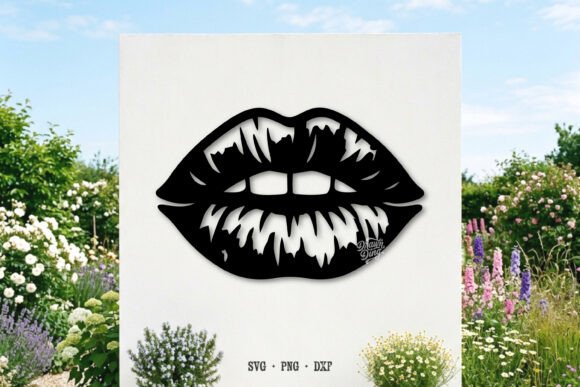
Mastering Your Projects with a High-Quality Lips SVG and Laser Cut File
There is a distinct satisfaction in watching a digital design transform into a physical object, whether it is a vibrant t-shirt, a sleek wooden sign, or a custom decal for a water bottle. The Lips SVG, Laser Cut File has become a staple in the crafting community for good reason; it represents boldness, style, and versatility. However, the journey from downloading a file to holding a finished product is often where things can go sideways if you are not paying attention to the details. Many creators, from hobbyists to small business owners, rush through the preparation phase, assuming that all digital assets are created equal. This assumption is the first step toward wasted materials and frustrated evenings.
When you explore the market for cut files, you will encounter a sea of options. What sets a professional-grade asset apart is not just the image itself, but the ecosystem of formats provided to ensure compatibility across different machines and software. A robust package should never leave you guessing. For instance, a comprehensive download typically includes an SVG file perfect for Cricut and Silhouette Cameo Designer Edition users, a PNG with a transparent background ideal for sublimation printing, a DXF for those using the basic version of Silhouette Studio, and a PDF that is print-ready, often including mirrored versions specifically for iron-on transfers. Ignoring the specific needs of your machine or the material you are using is a common pitfall that can be easily avoided with a little foresight.
Understanding Format Compatibility and Machine Limitations
One of the most frequent misunderstandings involves the difference between vector and raster files, and how they interact with your specific cutting software. Beginners often download a PNG when they actually need an SVG for cutting, or vice versa. If you attempt to cut a standard PNG without tracing it first in your software, the machine may struggle to interpret the edges, leading to jagged cuts or failed projects. Conversely, trying to use an SVG for sublimation without rasterizing it properly can result in pixelation if the resolution settings are incorrect.
To avoid this, always verify what your software requires before you begin. If you are using Cricut Design Space, Silhouette Studio, Sure Cuts A Lot, or Make The Cut, check the file extension. The SVG format is generally superior for cutting because it uses mathematical paths to define shapes, ensuring smooth lines regardless of size. The DXF format is a lifesaver for users on the free version of Silhouette Studio who cannot import SVGs natively. By ensuring you have the right file type for your specific setup, you eliminate unnecessary troubleshooting steps and protect your blade and mat from unnecessary wear.
The Critical Importance of Mirroring for Heat Transfers
Perhaps the most costly mistake in the world of heat transfer vinyl (HTV) is forgetting to mirror the design. When working with a Lips SVG, Laser Cut File intended for apparel, the design must be flipped horizontally before cutting. If you cut it normally and press it onto fabric, your final result will be backward. This error renders the project unusable, wasting both the vinyl and the garment.
A practical approach to preventing this is to rely on the resources provided in a high-quality download. Many premium packages include a PDF with pre-mirrored versions specifically for iron-on transfers. Utilizing these ready-to-print files removes the human error factor. If you are mirroring the file yourself within your design software, make it a habit to visually inspect the preview on your screen. Does the lip shape look correct? Is the text, if any, readable in reverse? Developing a checklist before hitting the "cut" button can save you significant money and time in the long run.
Evaluating Node Density and Cut Quality
Not all SVGs are optimized for cutting. Some files contain excessive nodes—tiny anchor points that define the curve of the image. While this might not be visible on your computer screen, a cutting machine reads every single node. An overly complex file with too many nodes can cause the machine to stutter, pause, or cut slowly, which often leads to "weedability" issues where small details tear away from the main design.
Before committing to a large production run, perform a test cut on a scrap piece of material. Pay attention to how smoothly the machine moves. If you notice hesitation or if the weeding process feels difficult because the lines are fragmented, the file may not be optimized. A well-designed Lips SVG, Laser Cut File will have clean, simplified paths that allow for crisp cuts and easy weeding. This is particularly important for intricate designs where the curvature of the lips needs to remain smooth and continuous.
Maximizing Versatility Across Different Materials
The beauty of having a multi-format bundle lies in its adaptability. You are not limited to just one type of project. The included PNG with a transparent background opens up a world of possibilities for sublimation printing on mugs, tumblers, and polyester fabrics. However, a common oversight here is ignoring the resolution requirements for sublimation. Ensure that the PNG provided is high-resolution (typically 300 DPI) to prevent blurry prints.
Similarly, if you are venturing into laser cutting wood or acrylic, the vector nature of the SVG or DXF is crucial. Laser cutters require closed paths to engrave or cut accurately. Open paths can result in incomplete cuts or unexpected burning patterns. Always zoom in on your design within your laser software to ensure there are no gaps in the lines. A professional file should be "closed" and ready for immediate use, allowing you to focus on material selection and machine settings rather than fixing broken vectors.
Making the Right Choice for Your Workflow
Ultimately, the goal is efficiency and quality. Whether you are a freelancer fulfilling client orders, an educator teaching a craft class, or a blogger creating content, your tools should support your workflow, not hinder it. When evaluating a Lips SVG, Laser Cut File, look beyond the preview image. Check the file list. Does it offer the variety you need? Is it compatible with your current software stack?
- Check for completeness: Ensure the download includes SVG, PNG, DXF, and PDF formats to cover all bases.
- Verify software compatibility: Confirm the files work seamlessly with platforms like Cricut Design Space or Silhouette Studio.
- Test before scaling: Always run a small test cut or print to verify sizing and mirror settings.
- Inspect the nodes: Look for clean lines that indicate a well-optimized vector file.
By taking these precautions and understanding the nuances of digital file formats, you elevate the quality of your output. You move from simply following instructions to truly mastering your craft. The right file acts as a foundation, allowing your creativity to shine without technical interruptions. So, before you start your next project, take a moment to review your assets. It is a small investment of time that yields substantial returns in the quality and professionalism of your finished creations.