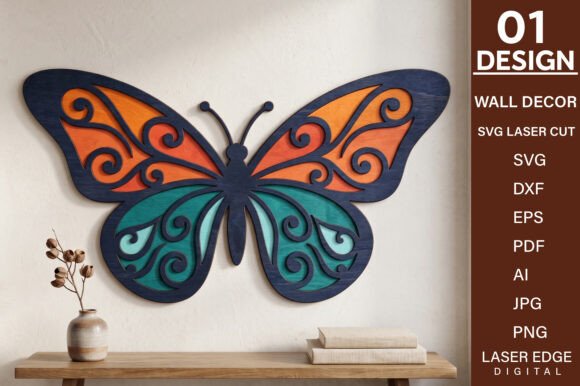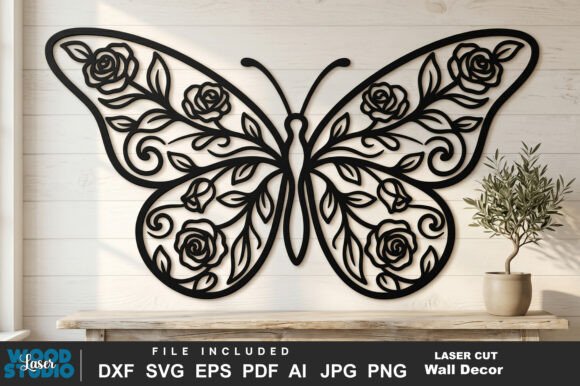
Unlocking Precision: The Ultimate Guide to Flower Butterfly Laser Cut SVG Designs
There is a distinct satisfaction in watching a laser cutter bring a digital design to life, especially when the subject matter blends the organic grace of nature with geometric precision. A Flower Butterfly Laser Cut SVG represents more than just a file; it is the bridge between your creative vision and a tangible piece of art. Whether you are crafting intricate wall decor, personalized gifts, or small-batch products for your shop, the quality of your source file dictates the success of your project. However, not all vector files are created equal. Many creators, from hobbyists to seasoned professionals, often overlook critical details in file structure that can turn a promising project into a frustrating exercise in weeding broken tabs or repairing scorched edges.
The allure of the flower and butterfly motif lies in its versatility. It appeals to a wide demographic, fitting seamlessly into bohemian, modern, and rustic aesthetics. Yet, the complexity of intertwining petals and delicate wing patterns presents unique challenges for laser cutting machinery. When you download a design, you are trusting that the artist has accounted for the physical limitations of materials like wood, MDF, acrylic, and leather. A poorly constructed file might look perfect on your screen but fail miserably under the laser beam. Understanding what makes a Flower Butterfly Laser Cut SVG truly "laser-ready" is the first step toward professional results.
The Hidden Pitfalls of Poor Vector Structure
One of the most common misunderstandings among beginners—and even some experienced users—is assuming that any SVG file found online is ready for immediate production. Standard web graphics often contain open paths, overlapping nodes, or disconnected elements that work fine for printing but are disastrous for cutting. When a laser follows an open path, it may cut through your material unnecessarily or fail to connect vital structural points, causing your finished piece to fall apart.
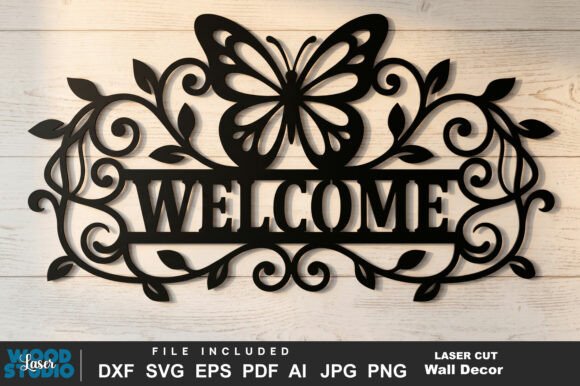
Consider the issue of "floating elements." In a standard illustration, a butterfly wing might hover slightly above a flower petal to create a shadow effect. In laser cutting, this gap means the wing is completely detached from the rest of the design. Without a fully connected structure, you end up with loose pieces that require tedious gluing or, worse, get lost entirely during the cutting process. This not only wastes expensive material like premium plywood or cast acrylic but also consumes valuable machine time. A high-quality Flower Butterfly Laser Cut SVG eliminates this risk by ensuring every element is physically linked through clever tabbing or continuous line work, maintaining the visual illusion of separation while providing structural integrity.
Another frequent error involves scale and line weight. Users often download a file and resize it without checking if the connecting bridges remain thick enough to hold the weight of the material. If you scale a design down too much, those crucial connections can become thinner than the laser kerf (the width of the cut), causing them to vaporize instantly. Conversely, scaling up a low-resolution file can reveal jagged edges that ruin the smooth curves of the butterfly wings. This is why receiving a package that includes editable formats like AI and EPS, alongside the standard SVG and DXF, is vital. It allows you to adjust the design intelligently rather than just stretching it blindly.
Material Compatibility and Machine Settings
Selecting the right file is only half the battle; understanding how that file interacts with your specific material is equally important. A design optimized for 3mm birch plywood may behave differently when cut from 4mm black acrylic. The reflectivity of acrylic, for instance, requires different power and speed settings compared to the absorbent nature of wood. If your vector paths are not clean, the laser may linger on certain spots, causing excessive charring on wood or melting on acrylic.
Many users make the mistake of ignoring the file format compatibility with their specific machine software. While SVG is universally popular, machines like older CNC routers or specific industrial lasers often prefer DXF files for their precise coordinate data. Using an SVG in a system that doesn't interpret bezier curves correctly can result in faceted circles instead of smooth arcs, ruining the elegance of the flower petals. Always verify that your download includes a DXF version if you are using software like LightBurn or operating a CNC machine. Furthermore, having a PDF version is incredibly useful for creating paper templates before committing to costly materials, allowing you to test fit and layout without waste.
For entrepreneurs and small business owners, consistency is key. If you are producing a batch of wall decor, you cannot afford variations caused by inconsistent file paths. A professional-grade Flower Butterfly Laser Cut SVG ensures that the tenth cut looks exactly as pristine as the first. This reliability builds trust with your customers and streamlines your production workflow, reducing the need for post-processing sanding or painting to hide errors.
What to Check Before You Download or Buy
Before integrating a new design into your workflow, take a moment to evaluate the file package. A comprehensive set should never be limited to just one format. Look for a bundle that includes:
- SVG: The primary vector file for most modern laser software and web use.
- DXF: Essential for CNC compatibility and older laser controllers.
- EPS & AI: Crucial for making deep edits in Adobe Illustrator or CorelDraw.
- PDF: Great for quick previews and manual templating.
- PNG & JPG: Useful for marketing mockups and social media previews before the item is even cut.
Additionally, inspect the preview images closely. Do the connections look natural, or do they appear as obvious, bulky tabs? The best designs hide their structural necessities within the artwork itself—for example, using a vein in the butterfly wing or the stem of a flower as a connection point. This attention to detail separates amateur clips from professional assets.
Maximizing Your Creative Potential
When you have the right tools, the possibilities expand significantly. A well-constructed Flower Butterfly Laser Cut SVG is fully scalable, meaning you can create anything from a delicate jewelry pendant to a large-scale statement piece for a living room wall. Because the paths are clean and the structure is sound, you can experiment with layered effects. Try cutting the butterfly from one material, like stained wood, and the flowers from another, like colored acrylic, then assembling them for a striking 3D effect.
Educators and workshop leaders will also find these designs invaluable. They serve as excellent teaching tools for demonstrating the importance of vector topology and material science. Students learn quickly that a pretty picture on a screen does not always translate to a functional physical object unless the underlying geometry is sound.
Ultimately, the goal is to spend less time fixing files and more time creating. By choosing a Flower Butterfly Laser Cut SVG that prioritizes clean vector paths, fully connected structures, and broad software compatibility, you safeguard your projects against common failures. Whether you are using a Glowforge, xTool, OMTech, or a custom-built rig, the foundation of your success lies in the quality of your digital blueprint. Invest in designs that respect the physics of laser cutting, and you will consistently achieve smooth, precise, and professional-quality results that elevate your craft.